
By Philip C. Johnson
January 10, 2026
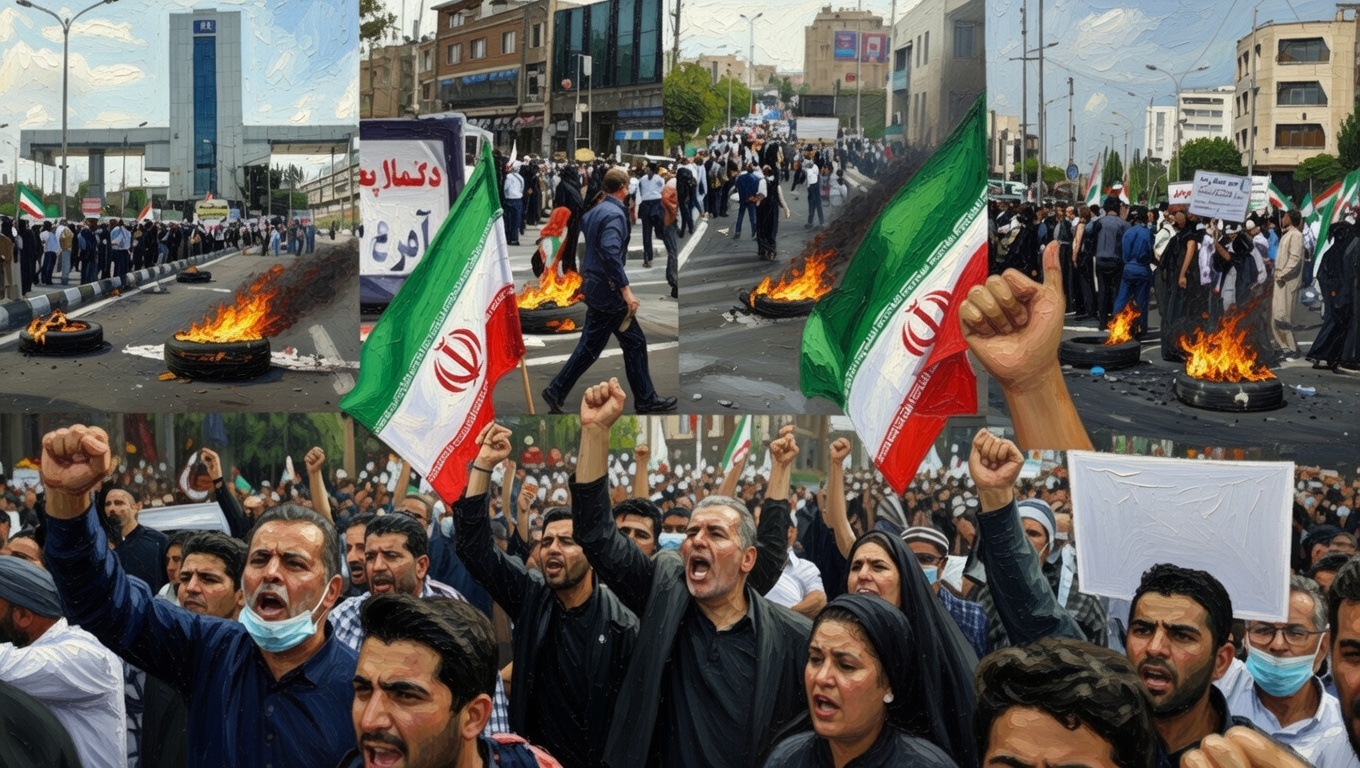
As of today, Iran is staring down its most explosive internal crisis since the 2022 Women, Life, Freedom uprising. Nationwide anti-regime protests kicked off on December 28, 2025, fueled by brutal inflation (over 42%), food prices rocketing up 72%, and the rial’s catastrophic collapse (now trading at around 1,455,000 rials to the US dollar on the black market). What started as rage over the cratering of the currency has quickly morphed into raw calls to topple the Islamic Republic, with crowds openly chanting “Death to Khamenei” and waving pre-1979 flags—a powerful symbol of deep rejection of decades of theocratic rule.
Spread and Scale of the Resistance
It all started in Tehran when bazaar merchants shut down in a massive strike, then the unrest spread rapidly to over 180 cities across every single one of Iran’s 31 provinces, according to HRANA (Human Rights Activists News Agency) and other independent watchers. We’re talking big players like Mashhad, Isfahan, Tabriz, Karaj, Shiraz, and Kermanshah, plus smaller spots in western strongholds such as Ilam and Lorestan—places the regime used to count on for loyalty. Not so much anymore. Streets have seen roadblocks, bonfires torching Khamenei portraits and regime flags, plus attacks on symbols like an IRIB building in Esfahan (the media hub of the regime’s propaganda) and public infrastructure in Tehran.
No city’s been outright “taken” yet—the regime still holds the guns and key spots—but the sheer geographic reach and stubborn staying power make this one of the broadest movements we’ve seen. It’s pulling in everyone: students, workers, women, ethnic minorities (Kurds pushing hard for general strikes), and those same fed-up merchants. I’m getting Arab Spring vibes from 2010-2011.
Success of the Protesters
This anti-theocracy wave has hit unprecedented levels, turning economic gripes into straight-up demands for regime change, with monarchist energy surging around exiled Crown Prince Reza Pahlavi. The protests have powered through more than two weeks of hellish crackdowns, complete with bold symbolic moves like protesters in Tehran renaming streets after Trump. If that’s not a desperate call for U.S. “help,” I don’t know what is.
I don’t want to rain on any anti-Islam revolutions—I’m rooting for the protesters. But to be honest—it’s partial progress at best. The human cost is grim: at least 45–51 dead (including kids), hundreds wounded, and over 2,000 locked up. The regime’s still standing without big defections, even bringing in Iraqi militias and Afghan fighters as backup. Analysts point to real cracks—Assad’s fall in Syria, those June 2025 U.S.-Israel strikes on nuclear sites—but we’re not at full systemic meltdown yet.
Regime’s Response
Khamenei and President Pezeshkian are spinning this as foreign-fueled “riots” by “vandals” trying to kiss up to Trump. Their playbook: total internet and phone blackouts, live rounds, tear gas, mass arrests, and threats of the harshest punishments. Khamenei swears no backing down, calling protesters enemy puppets. They’ve dangled subsidies and tax freezes to calm things, but the repression is only ramping up, with warnings they’ll preempt any U.S./Israeli moves.
Geopolitical Dimensions: Venezuela, Oil, and China
I see a direct connection here between Iran’s domestic meltdown and the U.S. takedown of Maduro in Venezuela on January 3, 2026 (arrested and removed in a military operation over drug and arms charges). That move disrupts Venezuela’s oil exports—China imported about 389,000 barrels per day from there in 2025 (roughly 4% of its seaborne crude).
Now, with U.S. influence redirecting those flows, Iranian heavy crude is stepping in to fill the gap fast—it’s the cheapest alternative at deep discounts. China, the world’s top crude importer, relies heavily on cheap oil from Iran, Russia, and Venezuela to fuel its economy and tech advances.
The U.S. tightening the noose on Venezuelan exports (and potentially more) has Beijing nervous—choking access to these bargain barrels hurts its economic edge, slows growth, and weakens alliances with rogue regimes like the old Maduro setup (which Iran used as a sanctions-busting hub). Short-term, China’s got buffers like floating storage and extra Russian/Iranian supply, but if this escalates, it squeezes Iran’s oil revenue even harder amid the protests. Smart play by the U.S.—hitting two birds with one stone.
Russia, Israel, U.S., and Trump
Russia is also scrambling and must know that something big is coming, because they’ve evacuated their embassy staff and families from Israel on multiple flights. Obviously they fear escalation spilling into Israel as things in Iran continue to heat up.
Israel, fresh off the June 2025 “Twelve-Day War” hits on Iran’s nuclear and missile sites, has green-lit more strikes under the “Iron Strike” plan if Tehran tries rebuilding. Netanyahu’s in lockstep with Trump, seeing Iran’s vulnerability as a golden window.
The U.S. is backing the protesters rhetorically—no boots yet—but Trump keeps hammering: if the regime slaughters demonstrators, America is “locked and loaded” to “hit hard” and “rescue” them. He calls Iranians “brave” and links it all to nuclear/missile leverage. Amid blackouts and crackdowns, protesters are making direct appeals for outside help, showing just how far the desperation—and hope—has spread.
Worst- and Best-Case Scenarios
Worst case: The regime bulldozes through with mass killings, mercenaries, and blackouts, digs in deeper, isolates further, and risks civil war or nuclear brinkmanship—possibly igniting a regional firestorm.
Best case: Relentless pressure, key defections, and external pressures (sanctions, strikes) finally break through, leading to a democratic shift or monarchy restoration, ending the theocracy and bringing some stability to the region.
Hoping for the latter. Praying for peace.
 The Global Nexter