
By Philip C. Johnson
October 9, 2025
Dateline: Rome – It’s 9:12 PM CET here in the Eternal City on October 9, 2025, just two days past the second anniversary of October 7, 2023. I’m sitting near the usual chaos at the Spanish Steps, but my thoughts are a few thousand miles to the east in Israel. I’ve been writing about Israel since 2006, when Hamas pulled off their upset win in the Palestinian legislative elections on January 25, quickly turning Gaza into a base for rocket attacks and raids. I’ve seen the back-and-forth with Gaza spill over to Hezbollah in Lebanon, tensions in the West Bank, and even echoes from Syria. It’s been a front-row seat to the grind.
Quick Recap
That October morning, Hamas launched a brutal cross-border attack—paragliders, gun trucks, absolute terror. They killed 1,200 Israelis, mostly civilians at a music festival and in kibbutzim, and snatched 251 hostages: families, old people, kids. Hamas called it payback for the blockade; the world called it atrocity.
Israel responded with Operation Swords of Iron—air campaigns and a ground invasion to dismantle Hamas. The cost: Over 67,000 Palestinians dead or injured, 1.9 million displaced (according to Gaza’s Health Ministry figures), and Gaza’s infrastructure gutted. Israel lost those initial 1,200 plus 700 troops. I’ve talked to politicians, soldiers, and survivors in the kibbutzim—it’s a brutal retelling of atrocities that don’t seem human on any level.
Why is the Conflict Ending Now?
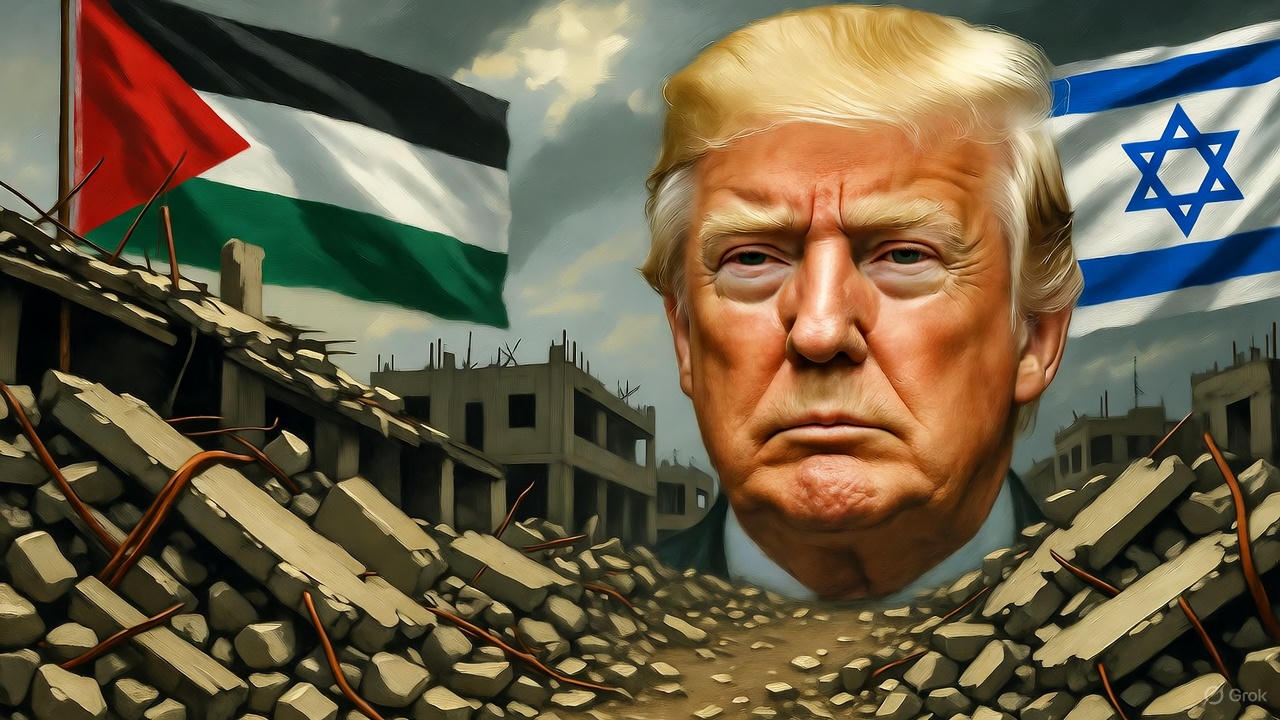
War fatigue hit both sides hard, with economies buckling and body counts climbing. Trump, back in the White House, leaned in with his trademark threats of escalation, while Qatar, Egypt, Turkey, and the U.S. hammered out the details in Sharm el-Sheikh. At yesterday’s cabinet press conference, with Trump beaming at his side, Secretary of State Marco Rubio dropped a line that’s got everyone buzzing: “We may or may not ever know all that went into the brokering of this deal.” Color me fascinated. It’s a nod to the black-box diplomacy that defines these breakthroughs—speculation’s rife about hidden sweeteners, like off-the-books U.S. tech transfers to Israel or Gulf backchannels pressuring Iran to stand down. In this neighborhood, what you don’t see is often what seals the deal; Rubio’s coyness hints at favors that’ll echo for years, for better or worse. And I’ll be writing about those yet-to-be-seen consequences.
Terms start Friday
Phase one—Hamas releases 20 living hostages and 30 bodies (including 13 from October 7). Israel withdraws to pre-war lines and frees 1,700 Palestinians, including 250 serving life for attacks like the 2002 Passover bombing (30 killed) or the Dolphinarium disco blast (21 teens). Later phases: Hamas disarms, hands power to a “technocratic” council—and of course, aid flows in. There always seems to be enough money for this part of the world. There’s no full exile for Hamas yet, but they’ll be monitored closely. The obvious weak spot? Enforcement.
In phase one, Hamas retains de facto control over daily governance and security in Gaza—running services, checkpoints, and militias—for the initial 42-72 days, as Israel pulls back partially (retaining a 53% buffer zone initially). Full disarmament and power handover to a transitional Palestinian committee (with international experts) kicks in during phase two, potentially within months, if talks hold; phase three locks in a 3-5 year reconstruction without Hamas dominance. But Hamas leaders have dodged specifics on disarmament, calling it a “sticking point,” and insist on guarantees that the war ends permanently. That’s like handing the keys to the fox while promising to build a better henhouse. Haven’t we seen this before? Does anyone really think this is permanently over? Remember, you’ve got a generation of kids who will grow up with bitter feelings about the loss of their families and their homes.
Celebrations kicked off anyway. Tel Aviv saw hugs and cheers for the hostages coming home. In Gaza, crowds handed out sweets for freed prisoners—and pure relief after 700 days of constant conflict. But Hamas keeps some power and arms for now; full disarmament is phased. And yes, that 1,700-release prize? It’s fueling a narrative in Gaza that Hamas “won” by extracting a massive concession without total defeat—crowds chanted for their armed wing, seeing it as proof of resilience amid the rubble. Polls show mixed feelings, and while relief is the dominant feeling, over half view Hamas’s October 7 call as “correct” in hindsight, and the prisoner swap is hailed as a morale boost, even if daily life stays shattered. Mark that down, folks. It’s an important indicator regarding the future.
Take a look at the reaction on X—it captures the range of sentiments. Rep. Anna Paulina Luna posted: “🇺🇸🕊️🇮🇱🤝🏼🇵🇸 End of Gaza war—Israelis and Palestinians celebrate together.” CNN’s Oren Liebermann captured Gaza’s mood: “Joy erupts… ‘Freedom for Palestine!’ chants rise from the ruins.” Skeptics like @EYakoby: “Hamas rejects disarmament—where are the ceasefire-now folks?” @MarioNawfal: “Polymarket odds at 48%… Hamas deals? Promises are cheap.”
What’s Next?
Reconstruction is bankrolled by Gulf states (Saudi, UAE, Qatar) and international donors—billions pledged for a 3-5 year overhaul of homes, hospitals, and ports. Who’s going to provide oversight? A Trump-chaired “Board of Peace” with U.S., UN, and Arab representatives monitoring funds and governance, supposedly preventing arms smuggling via Egypt and ensuring materials don’t arm Hamas. Again, wasn’t this what Israel’s blockade was supposed to have been all about? And bear in mind, according to data from past prisoner swaps, those 250 “lifers” that Gaza is getting back have a 30-50% likelihood of going back to their old terrorism tricks within a few years. And that, my readers, is likely to start the next round. But for now, “victory” and “peace” are the headlines with Trump’s gloating on Truth Social: “My deal—hostages home. Very proud!”
 The Global Nexter