
Philip C. Johnson
June 5, 2025
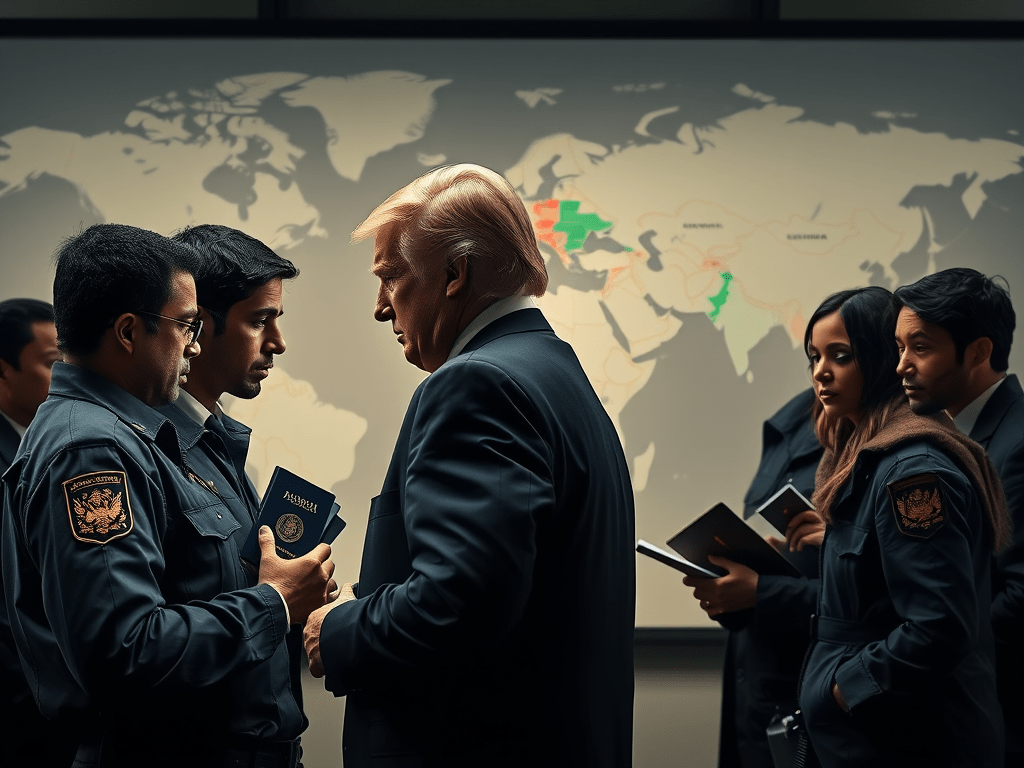
On June 4, 2025, President Donald J. Trump signed a proclamation banning entry to the United States from 12 countries and imposing partial restrictions on seven others, effective June 9, 2025. This move, rooted in national security concerns, aims to protect Americans by enhancing border controls and vetting processes. A good thing. The banned countries are Afghanistan, Myanmar, Chad, Republic of the Congo, Equatorial Guinea, Eritrea, Haiti, Iran, Libya, Somalia, Sudan, and Yemen. Partial restrictions apply to Burundi, Cuba, Laos, Sierra Leone, Togo, Turkmenistan, and Venezuela.
Reasons for the Ban
The Trump administration says the travel ban is a necessary measure to safeguard the U.S. from terrorism and other security threats. According to a White House fact sheet, the 12 fully restricted countries were chosen for this ban due to deficient screening and vetting capabilities, high visa overstay rates, or significant terrorist presence. For example, Haiti has a B-1/B-2 visa overstay rate of 31.38%. This would be like people stopping by your house for a visit and just never leaving. And maybe wearing your pajamas. Another example would be Somalia which is labeled a “terrorist safe haven” with inadequate central authority for traveler screening. Iran, a state sponsor of terrorism, and Yemen, a site of active U.S. military operations since January 2025, were also included due to their failure to cooperate on security matters. It should not come as a surprise that the United States would not welcome citizens from nations who are in conflict with us.
The partial restrictions on the seven additional countries target specific visa categories, such as tourist and student visas, due to concerns like Cuba’s refusal to accept deportees and Laos’ high overstay rates (34.77% for B-1/B-2 visas). A key incident prompting this action was the recent terrorist attack in Boulder, Colorado, by an Egyptian national, highlighting the dangers of inadequate vetting, though Egypt was notably excluded from the ban. Personally, I would have included Egypt on the ban, but it is obvious to me that the Trump administration needs to keep a good relationship with Egypt due to the ongoing conflict between Israel and Gaza.
Pushback and Criticism
The ban has drawn sharp criticism – a regular response to many of Trump’s executive decisions. The African Union warned of damage to diplomacy and trade, as seven banned countries are African. Critics like Representative Pramila Jayapal call it discriminatory, arguing it harms U.S. communities by blocking contributions from affected nationals. Immigrant advocates highlight its impact on Afghans with pending Special Immigrant Visas, who supported U.S. efforts but now face entry barriers. Legal challenges are expected, with groups like the ACLU preparing to argue the ban’s motives may overstep security justifications. And that is the problem with these “concerns.” They constantly argue from the viewpoint that America’s security is a secondary concern and that somehow, all people in the world, are somehow “Americans in waiting,” with some divine right to enter the United States.
When does the ban start?
The travel ban is set to take effect on June 9, with U.S. embassies and consulates preparing to halt visa issuance for the specified categories. There are some exceptions. If you’re a diplomat, you’re fine. Adoption cases? Also fine. Those with valid visas or green cards remain unaffected but may face increased border scrutiny. The administration has signaled openness to revising the list, potentially adding or removing countries based on compliance with vetting standards. Which is likely the entire point of the ban – to get other nations to step up and participate in effective vetting processes.
Illegal Immigration Under Biden and Security Concerns
During the Biden administration, illegal immigration surged, with significant implications for national security. According to Department of Homeland Security data, approximately 2.5 million migrant encounters were recorded at the U.S.-Mexico border in 2023 alone, with estimates suggesting 11-14 million illegal immigrants resided in the U.S. by 2022. As of this current year, 2025, exact figures are hard to come by. Some posts on X put the number between 40-100 million. A more reasonable number would be between 15-20 million. The Center for Immigration Studies (CIS) suggests that there are 15.4 million illegal immigrants living in the U.S. as of January 2025, based on Census Bureau data.
“Gotaways” – undetected illegal crossings – averaged 1,837 per day in 2023, totaling 670,674 annually. While most migrants sought economic opportunities or asylum, concerns persist about potential threats. The Trump administration reported a 655% spike in arrests of terrorists at large in the U.S. since January 2025, including one of India’s most wanted. The travel ban proclamation cites criminal networks, particularly from Haiti, and state-sponsored terrorism from countries like Iran as risks. Designating gangs like Tren de Aragua and MS-13 as terrorist organizations underscores fears of organized crime exploiting weak borders.
The Importance of Border Security
The U.S. faces complex threats in an interconnected world. Robust vetting and border controls are essential to prevent terrorism, criminal networks, drug cartel activity and the dangers from exploiting immigration pathways – yes, I’m talking about sex trafficking. The Boulder attack serves as a stark reminder of the consequences of inadequate screening. While critics argue the ban may strain international relations and economic contributions, and even so-called “human rights;” the administration’s focus on national security prioritizes protecting American citizens. A very good thing.
 The Global Nexter