
By Philip C. Johnson
January 26, 2026 – Jerusalem
In a wide-ranging conversation in Jerusalem, veteran Israeli peace activist and backchannel mediator Gershon Baskin offered a candid assessment of the Israeli-Palestinian conflict’s current state. Baskin, who has spent nearly four decades building unofficial dialogues with Palestinians—including Hamas—remains a rare voice advocating for pragmatic engagement amid deep mutual trauma. The discussion touched on his role in the October 2025 ceasefire, the moral calculus of hostage deals, the limits of talking to Hamas, Israeli public fatigue, Gaza’s reconstruction, Donald Trump’s outsized influence, and the enigma of imprisoned Fatah leader Marwan Barghouthi.
A Life of Unofficial Diplomacy
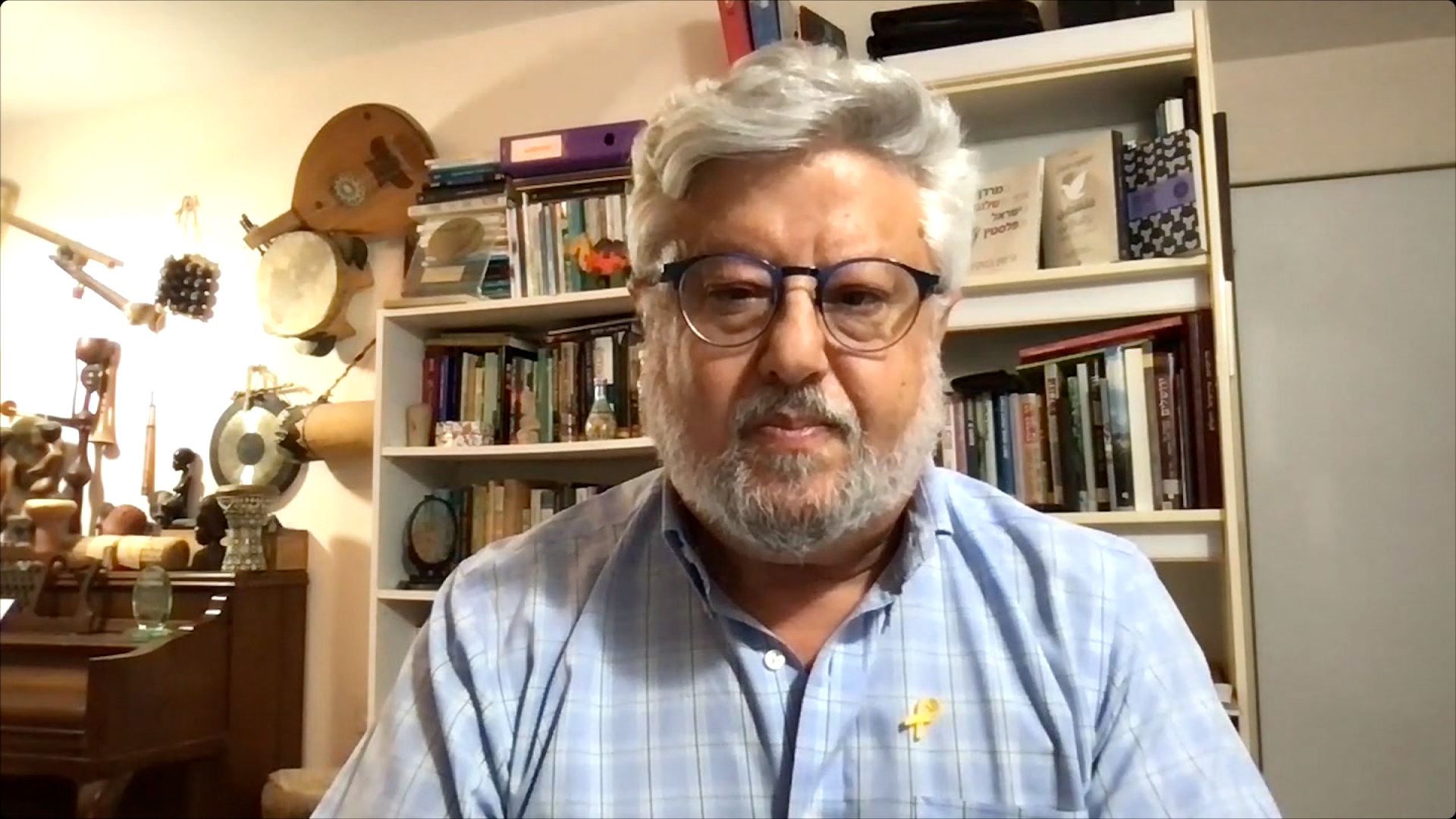
Baskin’s work began in 1988 when he co-founded the Israel/Palestine Center for Research and Information (IPCRI), creating “safe places” for Israelis and Palestinians to meet at a time when such contact was often illegal or taboo. Over 24 years, IPCRI facilitated more than 2,000 working groups on issues ranging from water resources to Jerusalem’s future.
His engagement with Hamas started in 2005 at a World Bank conference in Cairo, where a chance introduction to a Hamas-affiliated economics professor from Gaza’s Islamic University sparked conversations that echoed earlier PLO dialogues. Despite a failed attempt to launch an official Israeli-Hamas dialogue group, Baskin’s contacts expanded, including visits to Gaza and meetings with advisors to the Hamas prime minister after the 2006 elections.
Personal tragedy deepened his commitment. After a cousin was kidnapped and killed by Hamas, Baskin vowed to act if similar situations arose. When Israeli soldier Gilad Shalit was abducted in 2006, those contacts enabled him to open indirect channels, produce a proof-of-life letter, and help facilitate the eventual 2011 exchange that freed Shalit in return for 1,027 Palestinian prisoners.
The 2025 Ceasefire: Facilitating Without Deciding
Baskin described his involvement in the October 2025 U.S.-brokered ceasefire as that of an independent facilitator. He maintained contact with eight Hamas leaders outside Gaza—mostly in Istanbul, some in Doha and Cairo—and worked to clarify positions, including Khalil al-Hayya’s willingness to meet U.S. envoy Steve Witkoff. He emphasized that engaging Hamas directly was necessary to avoid perceived insults to honor, which could derail progress.
Today, Baskin believes Hamas is “decimated” in Gaza: no functioning political leadership remains, and military command has been reduced to a handful of low-level officers. He predicts the new technocratic executive committee—chaired by Ali Sha’ath and supported by a U.S.-chaired Board of Peace—will gradually assume governance, with disarmament handled by a new Palestinian security force backed by Turkey, Qatar, and Egypt. Plans include weapons buybacks, integration of some former fighters into the police, and third-party mechanisms to remove offensive arms.
The Price of Pragmatism: Shalit, Sinwar, and Hostage Leverage
Baskin defended the 2011 Shalit deal as a “bad deal” but “the only deal,” driven by Israel’s ethos of never leaving soldiers behind. He mitigated risks by reducing the number of high-profile (“VIP”) prisoners to be released and securing expulsion clauses for many. He stressed that the Israeli government—not he—selected the final list, and the deal passed with near-unanimous security establishment support.
On Yahya Sinwar’s release, (who eventually became the overall Hamas leader in August 2024) Baskin noted Sinwar was not considered the most dangerous prisoner at the time (his convictions involved killing suspected Palestinian collaborators, not Israelis). He placed greater blame for October 7 on subsequent Israeli policy: “from the release of Gilad Shalit until October 7… Israel has done nothing to resolve the Israeli-Palestinian conflict.”
Ideology, Martyrdom, and the Limits of Dialogue
The conversation turned pointed when discussing Hamas ideology. Baskin described it as “an indoctrinated, distorted form of Islam that sanctifies death,” where martyrdom is framed as the highest duty. He agreed such theology makes surrender to Israel impossible but insisted full disarmament remains achievable—not to Israel, but to Palestinian authorities and regional partners.
When I referenced a pre-Syrian Civil War meeting I conducted with Hamas spokesman Talal Nasser—who declared Hamas would never accept a two-state solution and showed indifference to child deaths—Baskin acknowledged similar rhetoric but countered that it reflects “distorted theologies” from minority groups, not mainstream Islam or the broader Arab world. He noted post-October 7 support for Hamas spiked temporarily in Gaza (perceived as “liberation”) but has since collapsed; today, Gazans blame both Israel for destruction and Hamas for their plight.
Peace Fatigue and the Two-State Question
Baskin called current public opinion “irrelevant,” shaped by profound trauma: October 7 for Israelis and a catastrophe “worse than the Nakba” for Palestinians. Polls show only 20–30% Israeli support for two states, yet he cited research indicating conditional support rises to 70% if the other side is perceived as genuine.
He argued the core equation is interdependence: “Israelis will never have security if Palestinians don’t have freedom, and Palestinians will never have freedom if Israelis don’t have security.” Revival depends on 2026 elections producing new leadership committed to mutual recognition of historical and religious ties to the land—“From the River to the Sea, on two states we agree.”
Gaza’s Reconstruction and the Technocratic Horizon
Baskin stressed that Gazans’ immediate priorities are survival—housing, food, basic infrastructure—not politics. He urged rapid action: 200,000 temporary caravans, rubble clearance, and economic rebuilding. Disarmament, he said, should not delay these steps; Hamas has signaled willingness to transfer governance to the technocratic committee, though Israel has obstructed entry for some members and restricted border crossings.
He criticized Israel’s “addiction to control” and lack of confidence in others, contrasting this with the current U.S. administration’s unique leverage: “There has never been a U.S. president that Israel could not say no to.”
Trump: Dangerous Yet Decisive
Baskin offered a dual view of Donald Trump. He called him “very dangerous” for attempting to “undo 90 years of international relations” and projecting unchecked power. Yet he credited Trump with ending the Gaza war: “This war in Gaza would be going on if it wasn’t for Trump telling Netanyahu the war was over.” Baskin said he had urged both Witkoff and Hamas contacts to recognize Trump as the decisive actor.
Marwan Barghouthi: Symbol or Solution?
On imprisoned Fatah leader Marwan Barghouthi (viewed by some as a Nelson-Mandela-type figure)—convicted of murder in 2004 and serving multiple life sentences—Baskin described him as a “black box” after 24 years of harsh prison conditions, including recent reports of torture and solitary confinement. He knew Barghouthi well before his arrest and communicated with him through lawyers and family.
In 2023, Barghouthi supported a regional economic-security framework and two-state solution. Baskin polled mainstream Israelis (including former prime ministers, Shin Bet, and Mossad heads); most favored release if Barghouthi could unify Palestinians for peace. Yet he cautioned the outcome is uncertain: Barghouthi could emerge as a force for reconciliation or for self-determination at Israel’s expense. Israel opposed his inclusion in prisoner swaps, despite releasing more dangerous figures.
Looking Ahead
Baskin ended on cautious hope. Gaza needs immediate humanitarian relief and economic rebuilding. Curriculum reform (likely U.S.-led with Gulf partners) could reshape education on both sides. Language learning—Arabic for Israeli children, Hebrew for Palestinians—could foster understanding from grade one. Above all, he insists, the conflict has no military solution: only mutual recognition and political courage can break the cycle.
For Baskin, the equation remains stark and simple: two peoples, one land, no escape from each other, and no alternative to two states grounded in security and freedom for both.
 The Global Nexter