
Philip C. Johnson, Ph.D.
March 27, 2025
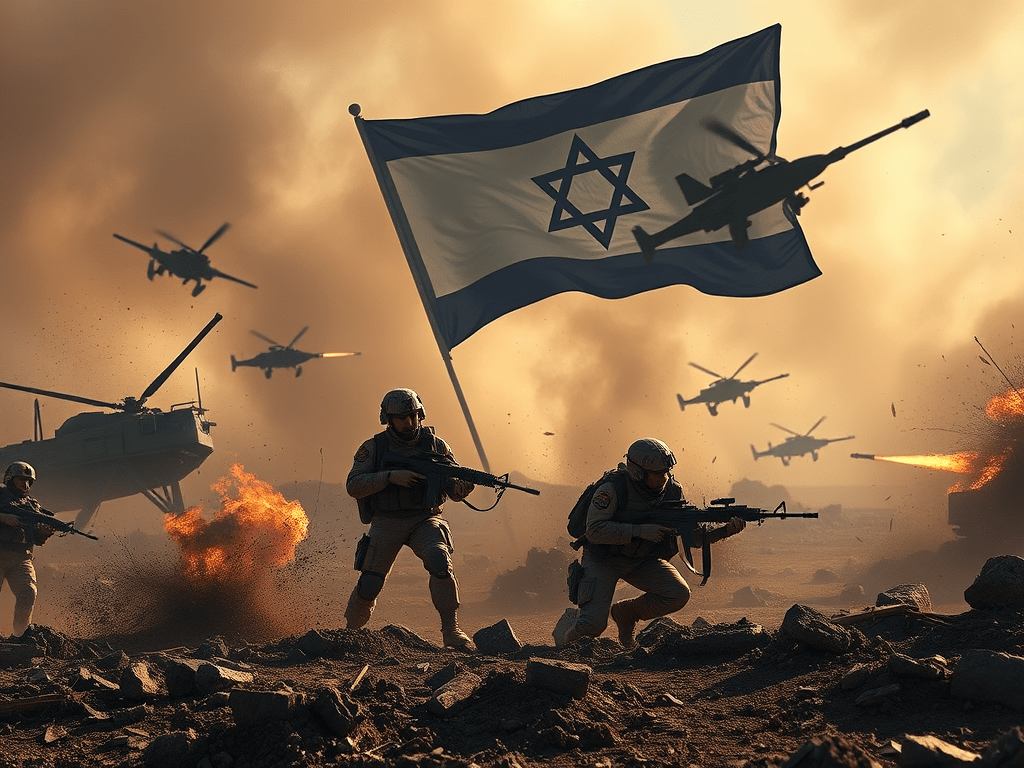
Israel has been in conflict with her neighbors for 538 days. For a short time, ceasefires held. A few Israeli hostages have been returned. Hundreds of Palestinian terrorists were released from Israeli prisons, some of whom will undoubtedly return to their old habits. But ceasefires do not last. They are not peace treaties. They are not declarations of surrender. And as of March 27, 2025, Israel finds itself actively engaged in a complex, multifront struggle against a coalition of adversaries—Hamas, Hezbollah, Syria, and the Houthis—each backed to varying degrees by Iran’s evil influence.
And in case anyone has lost the plot, (or accidentally swallowed a spoonful of Hamas or U.S. Leftist propaganda) Israel is not the aggressor. The State of Israel is defending its sovereignty, its people, and its right to exist against relentless attacks from terrorist organizations and their state sponsors. Below is a summary of each conflict, viewed through a lens that recognizes Israel’s moral clarity in confronting these threats.
Israel vs. Hamas: The Gaza Terror Campaign
The Bullet-Point: A battle against a genocidal terrorist group entrenched in civilian areas.
Since Hamas’s brutal October 7, 2023, attack that killed 1,200 Israelis and took 251 hostages, Israel has been forced to wage a defensive war in Gaza to dismantle this terrorist entity. Recent developments show Israel’s military precision in targeting Hamas operatives, such as the March 26th killing of spokesman Abdel-Latif al-Qanoua, while Hamas exploits civilians as shields.
Despite ceasefire talks collapsing due to Hamas’s bullheadedness—demanding the release of 620 Palestinian prisoners—Israel remains committed to neutralizing the threat. The Jewish state’s actions are a necessary response to Hamas’s unrelenting aim to destroy Israel, as evidenced by its rejection of peace and continued rocket attacks.
Israel vs. Hezbollah: The Northern Border Siege
The Bullet-Point: A fight to secure the north from Iran’s Lebanese proxy.
Hezbollah, Iran’s heavily armed proxy in Lebanon, has escalated tensions with Israel through rocket barrages and border incursions since joining Hamas’s war in 2023. Israel’s decisive strikes, including the assassination of Hezbollah leader Hassan Nasrallah five months ago, have weakened this terrorist group, though it persists in violating a fragile ceasefire. On February 23rd, Israeli jets flew over Beirut during Nasrallah’s delayed funeral, a clear reminder of Israel’s resolve. With Hezbollah’s arsenal depleted and its leadership in disarray, Israel’s operational goal is to ensure safety for its northern citizens, who have endured years of threats from this Iranian puppet.
Israel vs. Syria: Securing the Golan Heights
The Bullet-Point: A strategic push to prevent chaos and an Iranian stronghold on the doorstep.
Following the fall of Bashar al-Assad’s regime in December 2024, Israel has taken proactive steps to secure its border with Syria, targeting military assets in provinces like Quneitra and Daraa. Israeli forces conducted “targeted raids” to destroy weapons that could fall into hostile hands, a move Prime Minister Benjamin Netanyahu has justified as essential for a demilitarized buffer zone. While the Arab world and its defenders view these attacks as an aggressive move by Israel, they are not. The actions are a defensive necessity against the vacuum left by Assad’s collapse, which Iran and its proxies could exploit. Israel’s actions safeguard the Golan Heights and prevent a new front of instability.
Israel vs. Houthis: Countering Yemen’s Distant Aggressors
The Bullet-Point: A response to Iran-backed missile and drone assaults from afar.
The Houthis, Yemen’s Iran-aligned rebels, have launched over 100 attacks on Israel and disrupted Red Sea shipping since October 2023, claiming solidarity with Hamas. As of March 27th, tensions between Israel and the Houthis have escalated significantly. On Thursday, the Houthis launched two ballistic missiles toward Israel, triggering nationwide sirens and prompting millions to seek shelter. The Israeli military successfully intercepted these missiles before they entered Israeli territory. This makes the third missile attack from Yemen within a week.
The United States has also intensified its military campaign against the rebels, stating that these actions aim to deter Houthi attacks on international shipping in the Red Sea – as well as missile strikes aimed at Israel.
A Realistic Perspective on Middle East Conflict
Israel, like all nations, is flawed. In some ways, deeply flawed. But in comparison to her neighbors, Israel stands as an example of democracy and stability in a region rife with tyranny and terror. Facing Hamas’s savagery, Hezbollah’s aggression, Syria’s instability, and the Houthis’ belligerence, Israel’s military operations are not acts of conquest but of survival.
Each of Israel’s adversaries are tied to Iran’s destabilizing ambitions. And they collectively share a desire to seek Israel’s annihilation—a goal Israel will never allow to succeed. The Jewish state’s measured yet determined responses—killing terrorist leaders, securing borders, and striking distant threats—reflect its unwavering commitment to protect its citizens. Critics may complain about (and exaggerate) the collateral damage, but Israel’s enemies bear responsibility for embedding themselves among civilians, a tactic Israel counters with precision and restraint unmatched by its enemies. As these conflicts rage, Israel’s resolve remains a testament to its right to thrive in its ancestral homeland against all odds.
 The Global Nexter