
By Philip C. Johnson
September 2, 2025
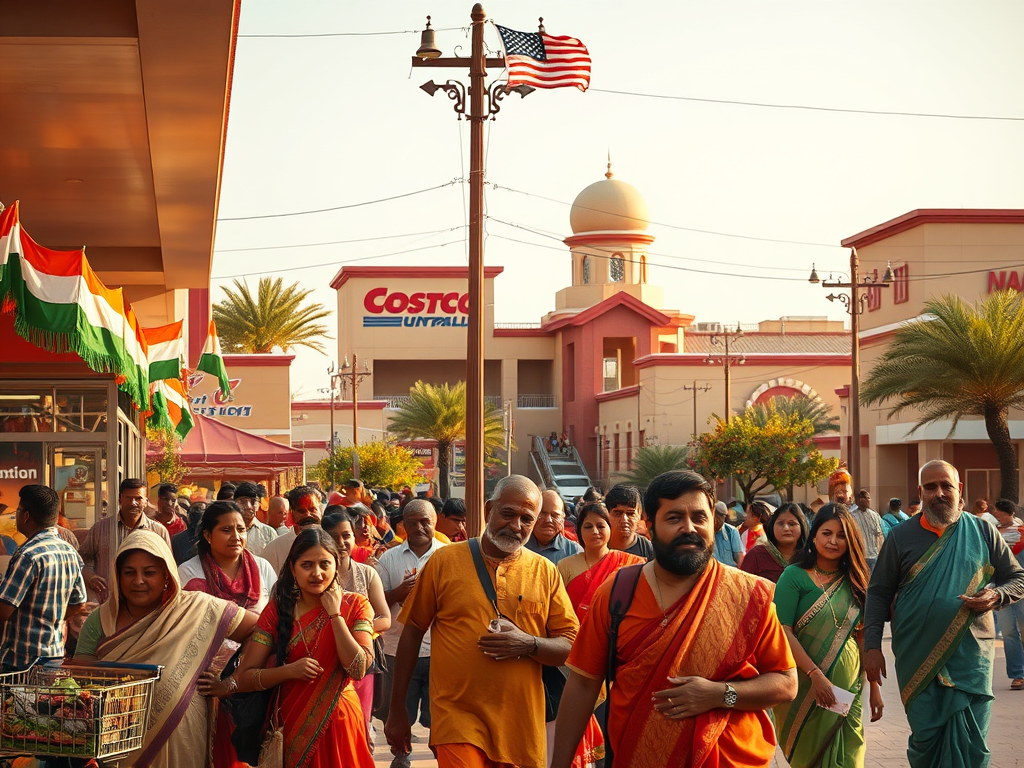
The Frisco area in Texas, located in both Denton and Collin counties, has experienced unprecedented demographic changes over the last 20 years—the approximate amount of time that I have lived in this area and witnessed the changes first-hand—driven by what some describe as a staggering 4,500% increase in immigration. This influx, particularly of Indian immigrants on H-1B visas, has transformed neighborhoods, raised concerns about cultural assimilation, and sparked debates about the impact on local communities. Concurrently, plans for a proposed Muslim village in Collin County have intensified discussions about religious diversity, cultural integration, and the values that shape America’s future. This article explores these developments, considers their implications from a Christian perspective, and examines the broader challenges of multiculturalism in the United States.
The Immigration Surge in Frisco
Frisco, a rapidly growing suburb of Dallas, has become a hub for immigrants, particularly from India, many of whom arrive on H-1B visas to work in the tech industry. Critics argue that this influx has strained local infrastructure and altered the cultural fabric of the area. Some residents report that new arrivals often cluster in specific neighborhoods, leading to what they describe as “ghettoization,” where communities become insular and less integrated with the broader society. Complaints include increased noise, perceived inconsideration in public spaces like roads and stores, and a reluctance to assimilate into American culture.
Anecdotally, some locals claim that Indian immigrants express little interest in adopting American values, prioritizing their own cultural practices instead. For example, Hindu religious practices, which most Christians view as worship of “false gods,” have become more visible and disruptive in Frisco, raising questions about religious pluralism. Critics also contend that H-1B visa holders are displacing American workers in high-skill jobs, fueling economic tensions. Recent social media discussions, including a viral video from a Frisco Costco highlighting the visible Indian population, have amplified these concerns, with claims that the Indian demographic has surged from 2.5% to nearly one-third of the city over the past 20 years, contributing to debates about job displacement and cultural change.
The Proposed Muslim Village in Collin County
In Collin County, plans for a Muslim village, known as EPIC City, have sparked debate about integration and cultural cohesion. Proposed by the East Plano Islamic Center (EPIC), the 402-acre development envisions over 1,000 homes, a mosque, a K-12 Islamic faith-based school, and commercial spaces near Josephine. Developers call it an inclusive, family-centric community open to all, funded through investor shares, with the first 450 plots sold out. As of September 2025, the project is stalled due to state investigations and a new law, House Bill 4211, which prohibits religious restrictions on property sales and complicates financing.
The proposal faces intense scrutiny, with Gov. Greg Abbott and Attorney General Ken Paxton launching probes into consumer protection, fair housing, and environmental issues, citing fears of “Sharia cities.” Developers deny any intent to impose Sharia law, emphasizing compliance with U.S. laws. Public opinion is clear: a March 2025 hearing saw over 90% of speakers oppose the project, citing concerns about Sharia, cultural incompatibility, and infrastructure strain, while supporters decry “Islamophobia” and defend religious freedom.
America’s Founding Fathers and the Limits of Religious Pluralism
To understand these concerns, it’s worth examining the views of America’s Founding Fathers on religious diversity, particularly regarding Islam and Hinduism. Figures like John Adams and Thomas Jefferson expressed curiosity about Islam but emphasized the importance of a shared civic framework rooted in Judeo-Christian principles. For many Founders, religious freedom was less about endorsing all faiths equally and more about ensuring the right to worship the “one true God” as understood within a Christian context. While the First Amendment protects religious liberty, some argue it was not intended to promote “false religions” like Hinduism or Islam but to safeguard individual conscience within a broadly Christian society. The Founders did not envision a multicultural melting pot that included Hindu or Muslim practices as core to American identity; their framework assumed a society influenced by Protestant values, where non-Christian religions would need to adapt to prevailing norms rather than reshape them.
The Broader Context: Multiculturalism and Its Challenges
The developments in Frisco and Collin County highlight tensions in American multiculturalism, where diversity can erode shared norms if assimilation falters. Two examples underscore this:
Minnesota’s Somali Community: Minneapolis’s Somali population has brought cultural vibrancy but also friction, exemplified by Rep. Ilhan Omar’s statements equating the U.S. with terrorist groups and minimizing 9/11 as “some people did something,” widely criticized as anti-American. Similarly, State Sen. Omar Fateh faced ethics probes over campaign donations from the fraud-plagued Feeding Our Future nonprofit and voter fraud allegations tied to his brother-in-law’s conviction, fueling perceptions of in-group loyalty over civic unity.
New York’s Cultural Enclaves: In Queens, Zohran Mamdani, the 2025 Democratic mayoral nominee, has stirred controversy with stances seen as antisemitic, like defending “globalize the intifada” and refusing to honor Israel’s founding or the Holocaust, raising concerns about prioritizing in-group identity over broader American values.
These cases show how multiculturalism, without shared values, can strain social cohesion, fostering mistrust.
A Christian Response: Grace, Gospel, and Civic Responsibility
For Christians, navigating these changes requires balancing compassion with responsibility. The Bible calls believers to love their neighbors (Mark 12:31) and share the Gospel with all (Matthew 28:19). This mandates a posture of grace toward immigrants, recognizing their dignity as image-bearers of God. However, there’s a tension between the romanticized idea of welcoming many immigrants in hopes of winning them to Christ and the reality that those from distinctly non-Christian cultures may resist American values, making evangelism harder. For example, a foreign Chinese student I know, who came to the U.S. as an immigrant for high school, attended a Christian school. The school wisely limited the number of foreign Chinese students, ensuring they were immersed in the school’s culture. As he shared with me, this forced him to interact with American students, form friendships, and engage with the school’s Christian values, ultimately leading him to trust Christ and become a follower of Jesus. Had he been part of a larger group of assimilation-resistant immigrants, this transformation might not have occurred.
Additionally, Christians have a duty to steward their communities wisely. Rapid demographic shifts can strain schools, infrastructure, and social cohesion, particularly when newcomers do not share Western values like individual liberty or civic participation. Engaging local government to voice concerns—whether about immigration policies, zoning for projects like the Muslim village, or job displacement—is a legitimate way to advocate for the common good. Christians must balance soft-hearted compassion with a commitment to order, ensuring their communities remain safe and sustainable for future generations. By engaging thoughtfully with both newcomers and local leaders, believers can shape a future that honors God, respects neighbors, and strengthens communities amid America’s complex cultural changes.
 The Global Nexter
Wowsers Professor! I knew Austin had become a hot mess with the influx of liberals from the West but this is the first I am hearing about the influx from the Far East, (or is India considered the Near East?). May God grant wisdom for believers and cooler heads prevail. I can hear the cries of, “Remember the Alamo!” from Florida.
India is considered Asian or South Asian or from the Indian subcontinent. I’ve worked in India many times – very delightful encounters. But assimilation is important for U.S. cohesiveness. Wisdom is needed.