
September 12, 2024
Phil Johnson, Ph.D.
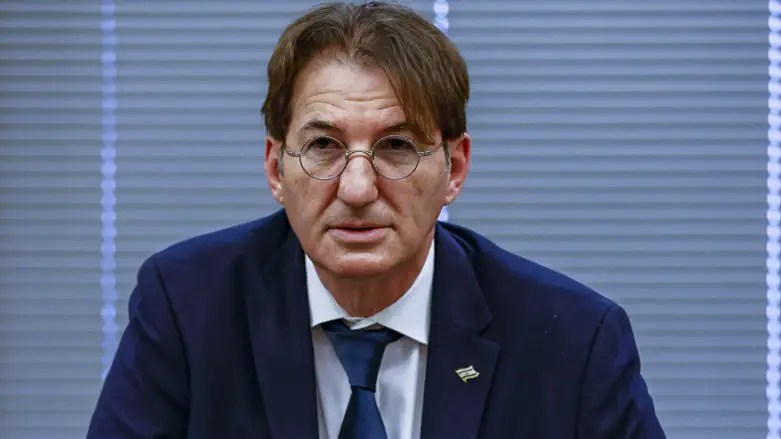
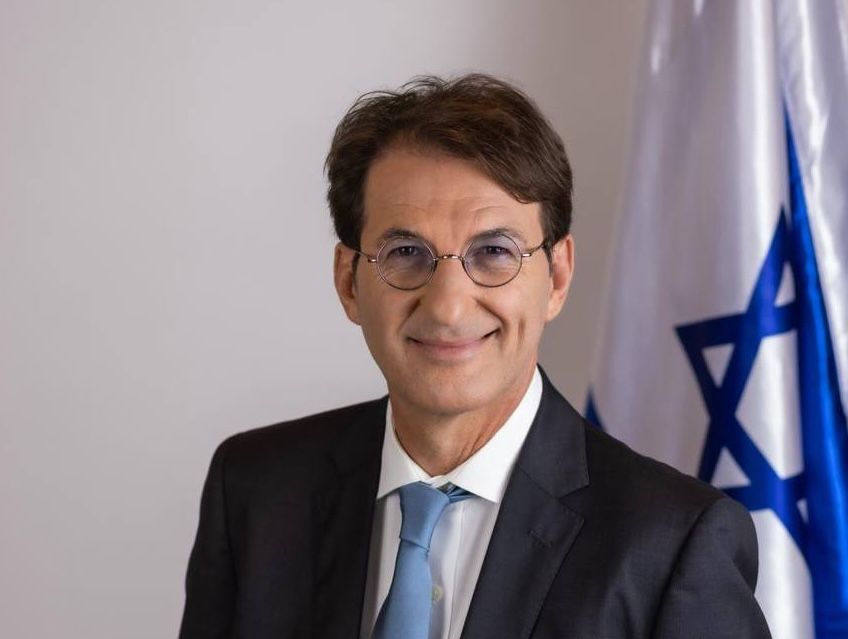
Boaz Bismuth is a current Knesset Member in the Likud party. Until 2022 he was a journalist and editor-in-chief of Israel Hayom. Before that, he was Israel’s ambassador to Mauritania.
Sitting in his office in the Knesset building in Jerusalem, I asked Boaz Bismuth to tell me about the morning of October 7, 2023. This is a portion of my interview with him.
“I woke up early, maybe around 6:00 AM. I was at home in Tel Aviv with my family, getting ready for the day. I remember my 10-year-old son, David, coming into the bathroom and shaking my leg.”
Boaz said that he had a fleeting thought of a time, exactly 50 years before, when he was 10 a ten-year-old boy. On October 6, 1973 Israel suffered a surprise attack by a coalition of Arab states led by Egypt and Syria known as the Yom Kippur War. It was a bloody 19-day conflict that Israel nearly lost before turning it around and routing her enemies. Boaz Bismuth was having one of those moments when the past and the present merge in the most unpleasant of ways.
“David kept shaking my leg,” Boaz continued, “Saying, Daddy, Daddy, sirens!”
“What sirens?” Boaz responded. He hadn’t heard them. “I immediately turned on the television and suddenly I am seeing all of these bizarre images, people coming in from the sky with parachutes. I picked up the phone and called Bibi (Netanyahu). You know, we’re friends, him and me. Like everyone, we first of all had to understand what is happening and then we started, I mean, each one started working in his own topic, but it was dramatic.”
“The Yom Kippur War was 50 years ago, a war that we’re still digesting. We lost 2665 soldiers, it took 19 days. This one, this war, as you sit with me, the war is still going on, and you had another terrorist attack this morning with three deaths. We are living through a horror movie with no end. We’re already 11 months in this war, and what do I do? I attend funerals. I visit with the families of those taken hostage. I just attended a ceremony for a father who saved his son from the terrorists, but lost his own life.”
“This is an event on a biblical scale. It is huge. And it’s with you every day. You sit beside the hostage who has been released. I see the father of this amazing girl who comes to me and begs for her return. You see those whose loved ones will not come back. You see the soldiers. You see the family of the soldiers. And those who beg you to stop the war and bring back the hostages. And those who beg you to finish Hamas in order not to repeat another 7th of October so that their sons will not have died for nothing. And you have to make decisions and realize you’re dealing with an enemy that is not a country, not a state, and go back and explain this to people.”
“And I will have to explain this to my son. This is something my son will take from me forever and ever.”
“How will you explain the massive intelligence failure?” I ask. “How is it possible that Israel, known for its legendary intelligence and security failed so spectacularly on this day?”
“Look, everything will be investigated,” Boaz said in that way people do when they don’t want to talk directly about the elephant in the room.
“There will be a commission. I think you don’t need to be a genius to know that responsibility will be very deep, very high and very large. Meaning for such an event, for such a catastrophic event, you will have…well, almost everybody will be responsible. Everybody will have his part of responsibility. Yet you asked specifically about intelligence, and I say to myself, I wonder along with you, is it only intelligence or is it also something we’re not reading?”
“Not only intelligence, but misinterpreting the enemy, because in fact, this is the key thing that you have to remember: Israel for weeks, months, years has claimed that Hamas and Hezbollah in the North are deterred, when in fact, you realize that the one who was deterred was us. Israel was deterred. Meaning if you have a front in the North and in the South, an enemy, which is a terrorist group, which does not stop arming itself in order to harm me, and they only increase the number of rockets, missiles, you have to ask, why are they doing that?”
“Look at me, I buy myself little cars. I’m a car collector. Are you a missile collector? Is this your hobby? No, you collect missiles because you want to use them, and this is why I say, why didn’t we do that before? Why didn’t we go and demolish their military capacity? Why did we accept that fact that the terrorist entity is reigning in the North and in the South? All of those questions will be asked, all of those questions will be answered.”
“But why have you let this situation fester?” I pressed. “Back in 2008-2009, you had Operation Cast Lead, Operation Pillar of Defense in 2012, and Operation Protective Edge in 2014. All conflicts with Hamas in Gaza. Why wasn’t the issue solved at any of those points? This isn’t your first go around with Hamas.”
“Excellent question,” Boaz responded, though it didn’t seem like it was a particularly novel question at all. In fact, since 2005 when Israel voluntarily vacated the Gaza Strip and Hamas was elected as its legitimate government, Gaza has been nothing more than a terrorist base, funded by Iran and an international community that has bought into the idea that Palestinians are perpetual victims.
Boaz continued, “As someone said, you write the future with the ink of the past. When we left Gaza in 2005, many people did not understand that situation. They thought that the Palestinians would embrace democratic elections in the way we understood them. But you cannot impose taste, you can’t impose culture on people. Kentucky Fried Chicken is maybe excellent chicken, but you can’t force people in Yemen, for example, to eat it. They prefer other things. In the case of chicken, it’s not good or bad, it’s simply a different taste.”
“But in the case of Gaza and Hamas, we’re not talking about chicken restaurants. It is indeed a bad thing in Gaza because they don’t believe in the respect of people. Sure you had elections in Gaza. Hamas won and they killed their own brothers and sisters who didn’t think like them. The first thing they did was burn down three synagogues that we had left behind. They could have used them for houses! And then the shelling against Israel starts. This is not a sign of peace. The cycle of violence continued. But we didn’t finish the job because we were told we did not have the legitimacy to overthrow Hamas from Gaza, because they were “democratically” elected.
“What is your response to the complaints that Israel doesn’t use proportional response when dealing with Hamas? That you’re killing too many civilians, especially children?” I asked.
“We are a country where the rule of law exists, where I know the morality, the high standards of Israelis, because the difference between us is, if a Jew harms an Arab without any reason, he will go to jail. If he’s a solider, he will be court-martialed. If a Palestinian kills a Jews, he gets a promotion, he gets sweets, he gets money, he gets whatever he wants.”
“There is no disproportion. The UN by itself took the figures about a month ago, I think, to half the amount, to the number of casualties. Hamas is the one delivering their numbers, so you don’t know what reality is. And this is the most important, I should have started with it: Any casualty in Gaza is the total responsibility of Hamas. We never wanted this war, and this war can end in 30 seconds. Hamas gives back the hostages, Hamas leaves Gaza, and the war is over. We have no reason, we have no intention of occupying Gaza.”
“Of course you had civilians, I mean, casualties, in Gaza and I am sorry for that. I do not wish to hurt civilians. If I hurt a civilian, then I failed. If Hamas hurts a civilian, this is their target. This is the difference. And they use their own people and children as human shields.”
“Let me tell you this amazing quote from (former prime minister) Golda Meir after the Yom Kippur War. “When peace comes we will perhaps in time be able to forgive the Arabs for killing our sons, but it will be harder for us to forgive them for having forced us to kill their sons. Peace will come when the Arabs will love their children more than they hate us.”
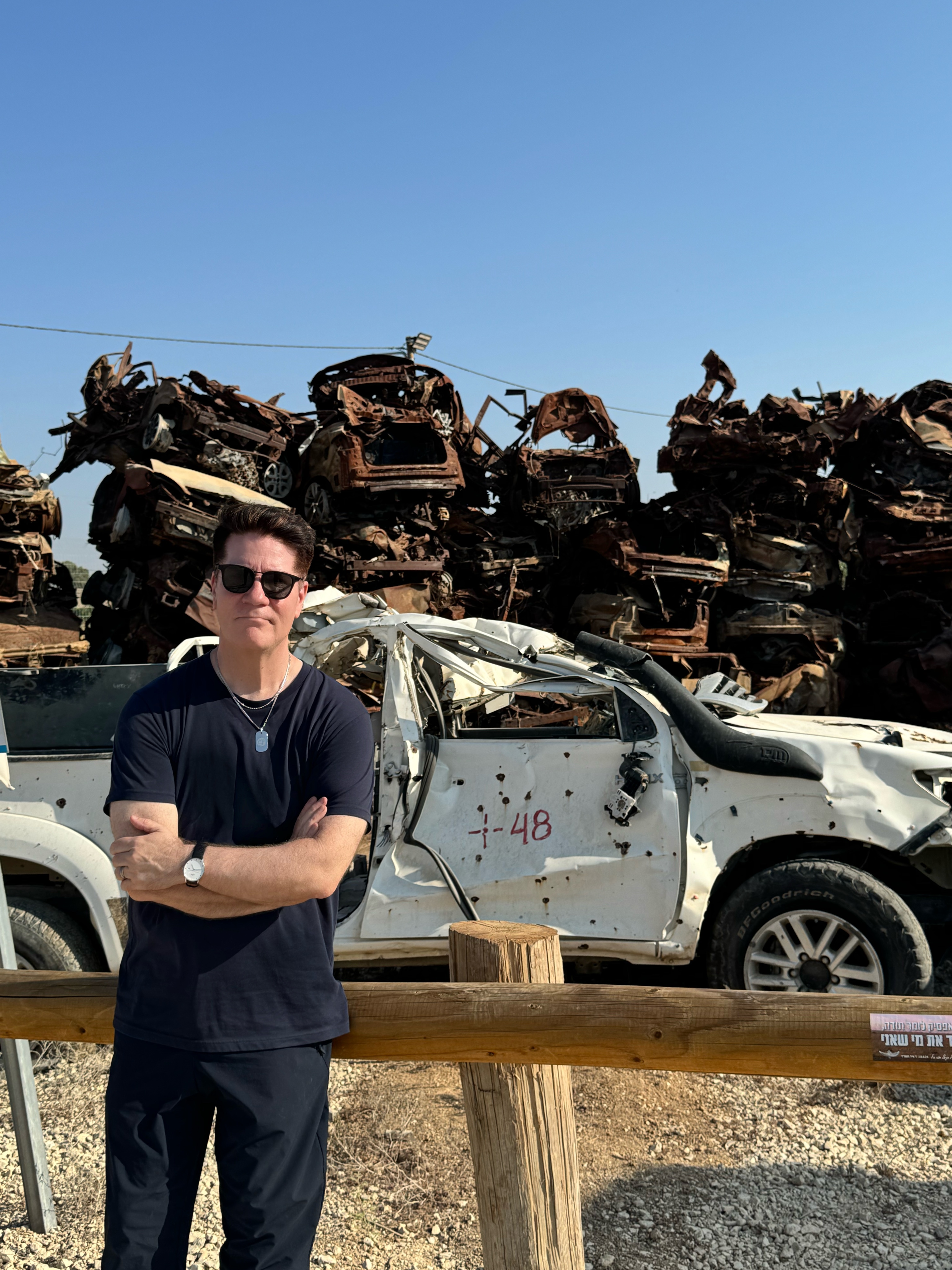
Phil Johnson in Southern Israel, on the Gaza border. Phil is the president and founder of Global Next. Learn more at www.globalnext.org
 The Global Nexter