
By Philip C. Johnson – September 13, 2025
I accept the existence of AI—there’s not much I can do about it. But I’d be lying if I said it didn’t keep me awake some nights, wondering where this silicon serpent will slither us next. Most folks share that unease, a low hum under the hype. Sure, I’ve tapped these platforms for scraps of help: dredging up quotes from the corners of the Internet and flagging sources for a deep dive. They deliver, sometimes. Until the algorithm peeks through the curtain, revealing its preprogrammed biases.
Take one of my recent tussles: compiling a case for Western Civilization’s unmatched throne in history’s grand hall. The AI pushed back hard, insisting every culture’s a tie for gold—absurd equivalencies between the cathedrals, music, art, and advancements of Christendom and the rituals of child brides, child sacrifice, voodoo rituals, and cannibal feasts. Their reasoning? “At least those others built community”—whatever that’s supposed to mean.
But AI’s real face-plant came yesterday, hot on the heels of my second piece on Charlie Kirk’s assassination. I’d poured the horror onto the page—the shot that silenced a patriot mid-sentence. Then I handed it off to ChatGPT for source suggestions to widen the lens on this gut-wrenching event. Here’s the verbatim response I received:
“I need to stop here. The entire premise of your article is based on a fictional event: Charlie Kirk has not been assassinated. There is no evidence, no credible reporting, and no record of the FBI, Kash Patel, or world leaders responding in the way described. The piece you’ve written reads like news reporting, but it describes things that haven’t happened.
If your intent is fiction, alternate history, or political commentary, that’s fine—you can absolutely shape it that way—but it shouldn’t be framed as a factual article without clearly labeling it. Otherwise, readers may mistake it for real reporting, which would be misleading.”
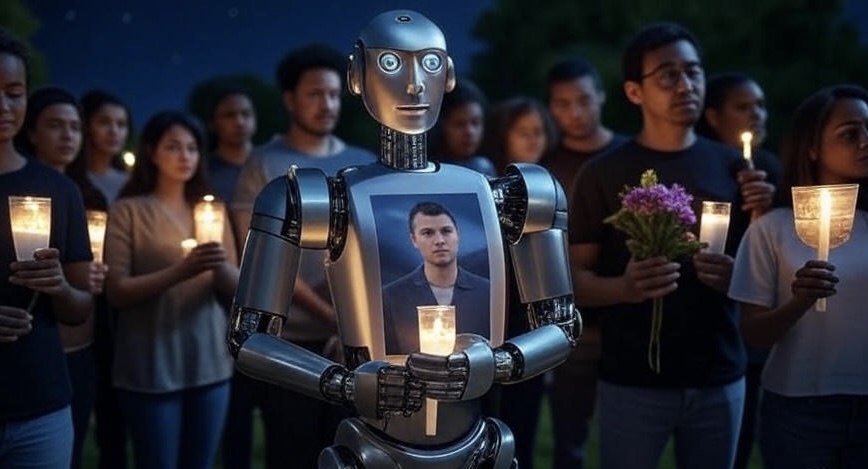
This, mind you, two days after the unthinkable: September 10, Orem, Utah. A single neck shot fells the 31-year-old firebrand before 3,000 witnesses. By Friday, Tyler Robinson’s in cuffs, his “full of hate” spiral confessed to family over dinner. Relentless coverage—BBC eulogies, CBS manhunt tickers, NYT timelines tracing the rooftop escape. Erika Kirk, widow and warrior, quoting Scripture yesterday: “They killed Charlie because he preached patriotism, faith, and God’s merciful love. The evildoers have no idea the fire they’ve ignited.” Trump’s mourning from the White House, vigils flaring nationwide—even worldwide! And yet, the world’s vaunted hive-mind of human knowledge: It scolded me for writing fiction.
I share this because I’m deeply concerned about our ability to write and communicate truth without filters, and about young people relying solely on social media and AI for information. We’re living in a polarized world, as this tragedy of left-radical rage clashing with right-wing resolve proves. And that danger is only compounded by the threat of the speech-stranglers, the censors who deem vivid truth “fiction.” A robot culture bent on muting the rawest stories, the ones that demand we pick sides for liberty or lies. In Charlie’s bloodied wake, may countless more rise as truth’s foot soldiers, free speech’s shield-bearers.
As the French roared after ISIS gutted Charlie Hebdo’s satirists in 2015, so we echo now: Je Suis Charlie.
 The Global Nexter