
Philip C. Johnson
April 22, 2025
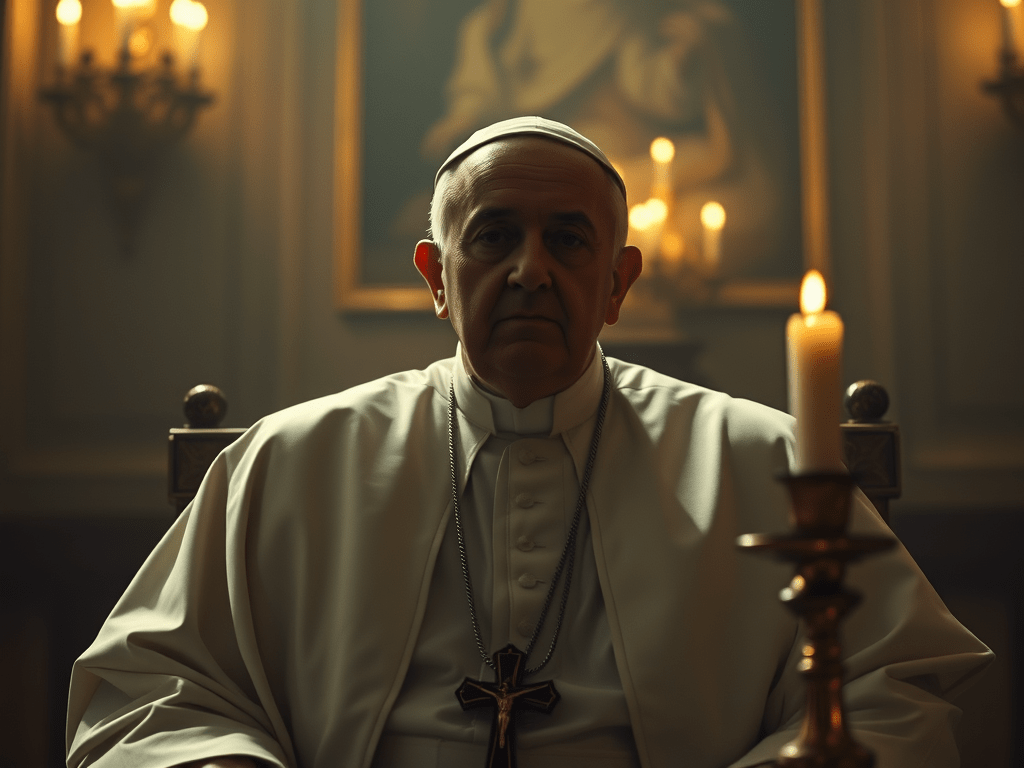
On April 21, 2025, the Vatican announced the death of Pope Francis, the 266th pope of the Roman Catholic Church, at the age of 88. His passing, following a brief meeting with U.S. Vice President J.D. Vance, has sparked a firestorm of speculation, conspiracy theories, and renewed debate about his polarizing papacy. From whispers of foul play to ancient prophecies, the world is grappling with the loss of a figure who reshaped the Catholic Church while dividing Christians globally. I have spent a lot of time in Rome over the years and have been at the Vatican during two periods when the papal throne was vacant. It’s an interesting time. More importantly, as a Protestant and conservative, I wanted to unpack some thoughts on this moment in history, the conspiracy theories, and why the future of Catholic leadership matters to all who follow Christ.
Rise to the Papacy and Illness
Born Jorge Mario Bergoglio on December 17, 1936, in Buenos Aires, Argentina, Pope Francis became the first Jesuit pope and the first from the Americas. He served as Archbishop of Buenos Aires before his election as pope in 2013, following the resignation of Benedict XVI. Which in and of itself was nearly unprecedented. Pope’s die in office – they don’t retire. Many will remember Pope Francis for his focus on the poor, climate issues, interfaith dialogue, open borders, and being unclear when it came to where the church sat on LGBTQ issues. He was, in short, a progressive pope.
Francis’s health declined in recent years, with hospitalizations for bronchitis and severe double pneumonia in early 2025. On Easter Sunday, April 20, he met briefly with Vice President J.D. Vance at the Vatican’s Domus Santa Marta, exchanging Easter greetings and gifting Vance rosaries and chocolate eggs for his children. Less than 24 hours later, Cardinal Kevin Farrell announced that Francis had “returned to the house of the Father” at 7:35 a.m. on Easter Monday, April 21, 2025, at Casa Santa Marta. The Vatican cited natural causes, (a stroke that put him into a coma and led to heart failure) but the timing of his death—hours after meeting a political figure with whom he had publicly clashed—ignited a wave of speculation.
Conspiracies: From J.D. Vance to Ancient Prophecies
The internet, particularly platforms like X, erupted with theories following Francis’s death. The most sensational accused Vice President J.D. Vance, a Catholic convert since 2019, of involvement in the pope’s demise. Vance’s meeting with Francis came amid tensions over the Trump administration’s mass deportation policies, which Francis condemned as a “violation of dignity” in a February 2025 letter to U.S. bishops. Vance had defended these policies using the medieval Catholic concept of ordo amoris (order of love), arguing for prioritizing one’s family and nation over foreigners. Francis rebuked this interpretation, emphasizing a universal Christian love “open to all, without exception.”
Critics on X didn’t hold back. Posts ranged from darkly humorous—“JD, what did you do?”—to outright accusations of Vance being the “Antichrist.” Some pointed to the brevity of the 17-minute meeting and Francis’s frail condition, suggesting Vance’s insistence on the audience was reckless or worse, sinister. One user on X quipped, “JD, please visit George Soros next,” while others questioned why Vance, initially snubbed by the Vatican in favor of a meeting with Cardinal Pietro Parolin, was granted a last-minute audience. No evidence supports any of these claims, but they reflect the polarized climate surrounding Francis’s papacy and Vance’s role in the Trump administration.
Another conspiracy centers on a 900-year-old prophecy attributed to St. Malachy, a 12th-century Irish bishop. According to tradition, Malachy’s Prophecy of the Popes lists 112 pontiffs from his time until the end of the papacy, each described by a cryptic Latin motto. Pope Francis, the 112th, is linked to the motto Petrus Romanus (Peter the Roman), who, the prophecy claims, will be the final pope, leading the Church through tribulation before Rome’s destruction and the return of Christ. Unsurprisingly, interpretations vary: some see “Peter” as a literal name for the next pope, others as symbolic of a return to the apostolic simplicity of St. Peter, the first pope. Skeptics, including many Catholic scholars, dismiss the prophecy as a 16th-century forgery, noting its vague phrases and historical inaccuracies. But of course when a Pope dies, conspiracy theories resurge. It simply underscores the anxieties about Francis’s death and the Church’s future in a troubled world.
These conspiracies, while sitting on the edge of credibility, highlight the deep divisions Francis’s leadership exposed. His progressive stances—on migration, climate change, and inclusivity toward LGBTQ individuals—clashed with conservative Catholics and political figures like Vance, fueling narratives of betrayal or sabotage. The Malachy prophecy, meanwhile, taps into apocalyptic fears among those who see the Church at a crossroads.
A Protestant Conservative Perspective
As a Protestant and conservative, I view Pope Francis’s legacy with quite a bit of frustration. His papacy was a lightning rod, not just for Catholics but for all Christians, because the Catholic Church remains a moral and cultural force influencing global Christianity. Francis’s controversies stemmed from his departure from traditional Catholic teaching and his willingness to engage in political debates – while pretending to be apolitical. He often aligned with progressive causes that alienated conservatives. Here are a few examples:
First, Francis’s social teachings—particularly on migration and the environment—struck many conservatives as overstepping the Church’s spiritual mandate. His condemnation of border walls as “not Christian” and his critique of capitalism as exploitative clashed with conservative values of national sovereignty and free markets. For Protestants like myself, who often prioritize individual liberty and limited government, Francis’s rhetoric sometimes felt like an endorsement of secular ideologies over biblical principles. His 2016 remark that Trump’s border wall was “not Christian” was seen as a direct jab at conservative policies, deepening the divide. And the comment was particularly absurd when you remember that the Vatican itself is surrounded by a huge wall and protected by Swiss guards.

Second, Francis’s approach to moral issues frustrated those of us who take the Bible, and what it teaches, seriously. While he upheld Catholic doctrine against abortion and female priests, his softer tone on homosexuality (“Who am I to judge?”) and approval of same-sex blessings in 2023 were seen as watering down the Church’s stance on sin. For conservative Protestants, who often share Catholic concerns about moral relativism, these moves raised fears of a Church bending to cultural pressures. And to be fair, it’s not just the Catholic Church that has been influenced by current culture – certain Protestant churches have their fair share of compromises for which they must give an account.
Third, Francis is responsible for appointing 110 of the 138 cardinals eligible to elect his successor. So while surveys suggest that younger priests have been trending more conservative, the configuration of the upcoming conclave raises concerns about the future of the Catholic church’s direction.
Regardless, Francis’s papacy mattered to Protestants because the Catholic Church shapes the broader Christian witness. With 1.4 billion Catholics, its teachings influence global debates on family, morality, and justice—issues that transcend denominational lines. A Catholic Church perceived as compromising on biblical truth risks weakening Christianity’s collective voice in an aggressively secular age.
For conservative Protestants, the next pope’s stance on issues like religious liberty, the sanctity of life, and traditional marriage will either bolster or undermine shared Christian values.
Bottom Line
The conspiracies surrounding Francis’s death—whether blaming J.D. Vance or invoking ancient prophecies—reflect a deeper unease about the Church’s role in a broken world. While these theories lack evidence, they underscore the stakes of the papacy. A pope who aligns with biblical orthodoxy could unite Christians across denominations; one who leans further into progressive reforms risks deepening divisions. The Malachy prophecy, though dubious, captures a truth: the Church faces a pivotal moment. Will it return to its apostolic roots, as “Peter” might symbolize, or continue down a path many conservatives see as compromising?
As Protestants, we don’t look to the pope as our spiritual leader, but we cannot ignore the ripple effects of his office. The next conclave will shape not only the Catholic Church but the broader Christian witness. We pray for a leader who upholds the unchanging truth of Scripture while navigating the challenges of our time with wisdom, clarity, and courage. Pope Francis’s legacy, for better or worse, reminds us that the Church’s mission—to proclaim Christ crucified—belongs to all who identify as followers of Jesus.
Sources:
• Hindustan Times, “JD Vance’s meeting with Pope Francis before his death sparks conspiracy theories.”
• The New Republic, “Did JD Vance Kill the Pope? An Investigation.”
• People, “J.D. Vance Met with Pope Francis Just Before the Pope’s Death.”
• POLITICO, “Pope Francis leaves a complex, divided legacy.”
• General knowledge of St. Malachy’s Prophecy of the Popes, widely discussed in Catholic and apocalyptic literature.
 The Global Nexter
Hmmm, thought provoking as expected. Personally in my own ‘Jesus follower’ bubble, I have never thought of the bigger picture of how the Catholic church’s stand on morality might impact Protestant’s thinking. For me it is the simple truth of what is right in God’s word that determines my moral compass.
Mainline denominations, especially in the US have been going down a slippery slope for years. Too many are trying to stay relevant in society and not offend rather than speak God’s truth in love. Just my .02 contribution. Love ya brother!
Thank you, my friend. I could sit around and debate all of my doctrinal concerns regarding Catholicism. And those differences are substantial. But in a world that wants to make quoting parts of the Bible “hate speech,” or (as in the UK) making silent prayer near an abortion clinic an arrest-able offense, I would not mind having a billion more people on my side regarding biblical, orthodox, reality-based truth. 😊
You make a very good point. The laws in the UK are scary! Our daughter-in-love and kids regularly gather at local abortuaries to sing and pray. They have had some wins reaching mothers and saving souls and lives by doing so. They have been verbally and physically threatened but thankfully US laws are on their side.
Dr. Johnson, I learned of you and your trips and writings from a fellow teacher. Great article. I have no idea what is happening in England today. However, your article is not one way or the other. Just truthful.
Thank you for your comment! And nice to meet you. I am glad you enjoyed my article. As for England…and Europe in general, a topic for another article. 😉