
December 28, 2024
Philip C. Johnson, Ph.D.
I know there will be purists out there who will argue that the 21st century began in 2001 and that the first quarter of the century will end with the conclusion of 2025. But I don’t care. What I believe is that for most people, there is a clarity to a calendar that begins with the year 2000 and culminates at the dawn of 2025. And that’s who I’m writing to. Because it’s about time we reckoned with the last 25 years by reviewing some of the high and low points.
So here’s my list. Not all years are created equal – some years yield more big moments than others, but here is my list of what I think are the most significant, memorable or world-shaping events of the last quarter century. Perhaps in the midst of this nostalgic look back you will be reminded of God’s grace, even in the unpredictable, often difficult times.
2000: The Y2K Scare and “Hanging Chads”
As the 20th century turned into the 21st century, the fear was that when the calendar clicked over from 1999 to 2000, the digital world would not be able to handle it. This was mostly due to the idea that the “two-digit” configuration of using just the last two numbers of a year would break electronic systems bringing the modern world to its knees. The year 2000 would read no differently than 1900 in the minds of a computer. Banks would shut down, planes would fall from the sky, nuclear missiles would accidentally launch, and complete chaos would ensue. People bought generators, stored food, shoved cash under their mattresses, and prepared their survival shelters.
And nothing happened.
It was interesting to watch the genuine disappointment on the faces of those who had invested so much in the idea of the world coming to a screeching halt. We were about 20 years too early for that.
But in a world that likes to give hints of the future, the year 2000 also gave us a taste of a contentious presidential election.
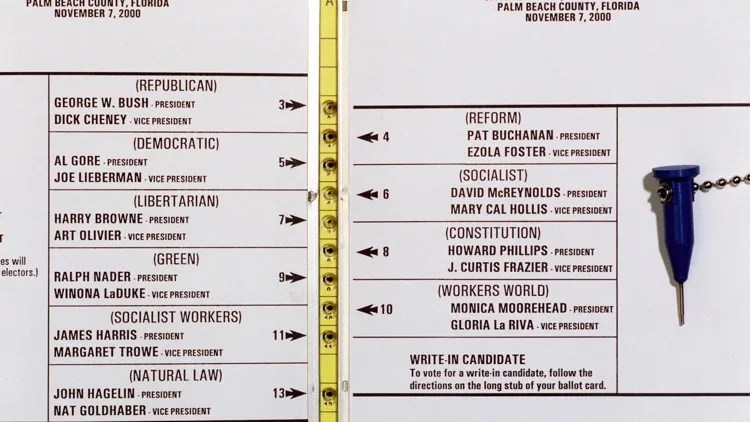
In November of 2000 voters headed to the polls to decide between Republican candidate George W. Bush and Democratic candidate Al Gore. It all came down to the votes in Florida which had issued a recount. Because of Florida’s punch-card ballots, words like “hanging chads” (partially punched ballots) and “pregnant chads” (indented but not fully punched ballots) floated into everyday conversations. On December 12th, the Supreme Court decided to halt the Florida recount, essentially awarding the state and the presidency to Bush.
2001: 9/11 Attacks
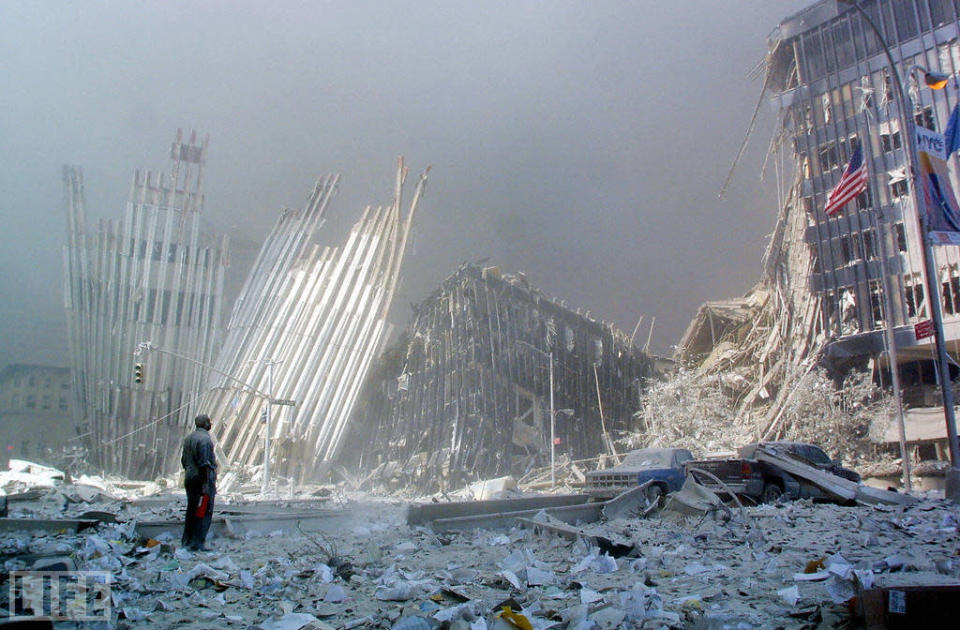
For most Americans, the events of September 11th defined the new century. All that had once been assumed to be safe and stable now proved to be otherwise. Nineteen terrorists from the Islamist group al-Qaeda carried out coordinated attacks on the U.S. resulting in nearly 3000 deaths.
At 8:46 AM American Airlines Flight 11 crashed into the North Tower of the World Trade Center in New York City. At 9:03 AM the South Tower was struck by United Airlines Flight 175. At 9:37 AM American Airlines Flight 77 hit the Pentagon in Washington, D.C. and at 10:03 AM United Airlines Flights 93 crashed into a field in Pennsylvania (most likely heading towards the White House) after the passengers bravely fought the hijackers.
Everyone will remember where they were when the Twin Towers in New York City came crashing down. I was on my 2nd-ever international leadership trip with a group of high school students in the Cayman Islands. It was a confusing time, but a moment that I knew would separate the world that I knew from the world that would come. It was also a time to come to terms with the idea of “peace.” More than ever I would realize that the kind of peace that people long for would not be realized this side of eternity. Writing this just after Christmas, I am reminded that Jesus came to earth not to bring geopolitical peace, but to make peace possible between a holy God and sinful man.
This point in history would also be a turning point for me as it would set into motion the ideas and opportunities that would eventually birth Global Next, the organization that I have been so pleased and honored to create and share in unexpected ways in unexpected places.
2002: War on Terror and the Euro:
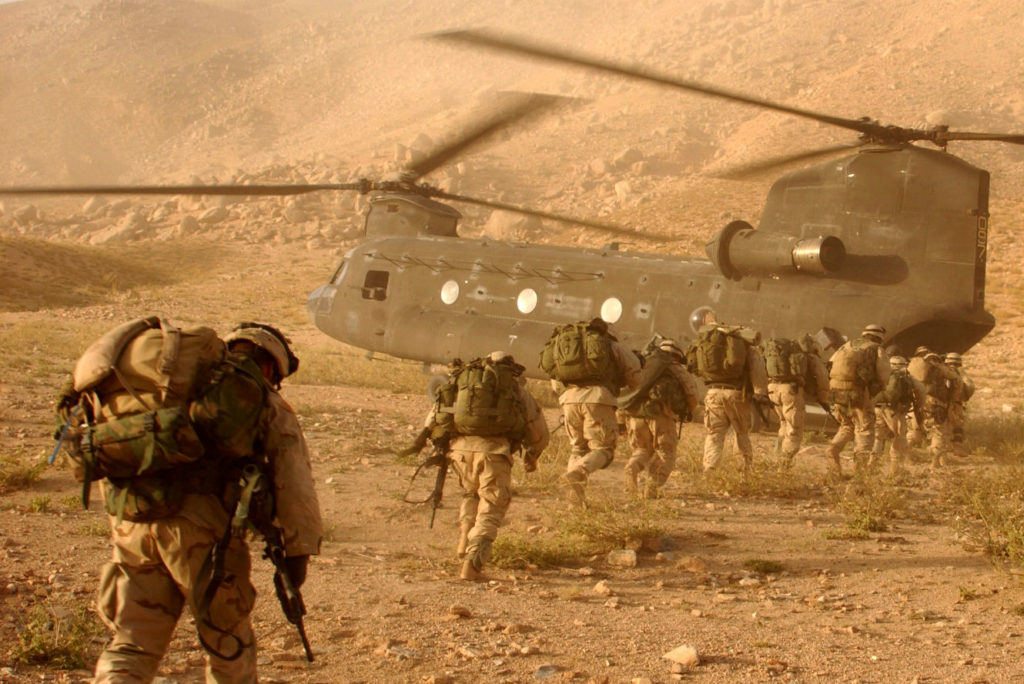
By the end of 2001, the U.S. and its coalition partners had already launched operations to dismantle al-Qaeda and overthrow the Taliban in Afghanistan (which was harboring Osama bin Laden and other al-Qaeda leaders).
In 2002 the U.S. put its efforts into trying to stabilize Afghanistan and deal with counter-insurgency operations from the Taliban. The Bush administration expanded its war on terror by naming Iraq, Iran and North Korea as the “Axis of Evil.”
Meanwhile, in Afghanistan, Hamid Karzai was named the Interim President of Afghanistan. He promised to rebuild Afghanistan and restore stability after decades of war. In reality, corruption took much more of his attention than rebuilding the nation. Fun Fact: I had lunch with Karzai once when I was working in Kabul around 2015. To be honest, he didn’t have any really gripping stories. I was pretty underwhelmed. I didn’t necessarily expect to be overwhelmed, but “whelmed” would have been nice. Boring lunch.

The year 2002 is also when the Euro became the official currency of the European Union. It was adopted by the 12 founding members of the EU. The benefit of the Euro was to create economic integration and price stability. But because all economies are not created equal, economic imbalances have created crisis after crisis, with Greece being a prime example. But if your goal was to inch closer to a “one world economy,” then sure – well done.
2003: Iraq Invasion:
The U.S. invasion of Iraq was a major military operation led by the United States and supported by the UK and other coalition allies under the belief that Iraq had weapons of mass destruction (WMDs).
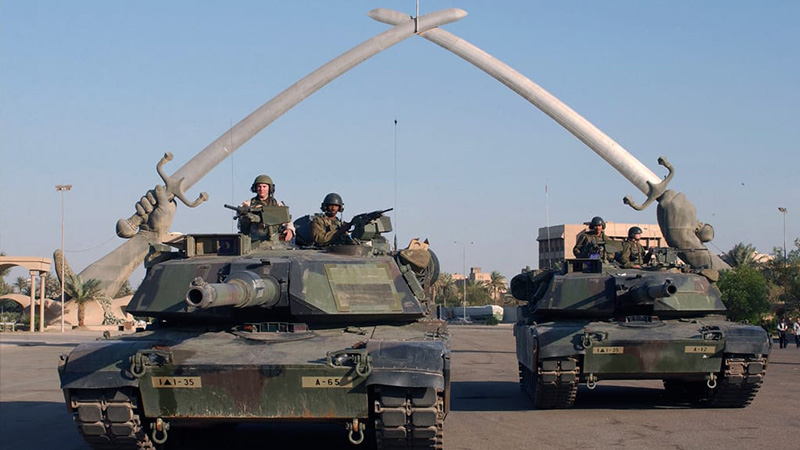
But no stockpiled WMDs were found. Neither were there overt ties between Saddam Hussein’s government and terrorist groups like al-Qaeda.
Historically there had always been misunderstandings between Iraqi president Saddam Hussein and the U.S. administration. After all, the U.S. had sided with Hussein during their war with Iran in the 1980s and provided them with intelligence info to make sure the Iranians wouldn’t win that war. But the U.S. was also supplying the Iranians with information.
After the Iraqi invasion of Kuwait in 1990 (an action that Saddam claims he thought had the tacit approval of the U.S.), things only got worse. A U.S.-led coalition fought to liberate Kuwait humiliating Iraqi troops and the fragile ego of its leader. By this point, there was a huge trust deficit between President Hussein and the Western Powers. Hussein began working his scientists as hard as he could to get a nuclear weapon prepared. That never came to be.
In the end, the brutal dictator, Saddam Hussein was removed from power. But at the cost of hundreds of thousands of Iraqis lives and thousands of coalition soldiers’ lives. The war cost the U.S. trillions of dollars. In addition, the removal of Hussein created a power vacuum leading to sectarian conflict and the eventual rise of ISIS.
2004: Tsunami Devastation and Facebook
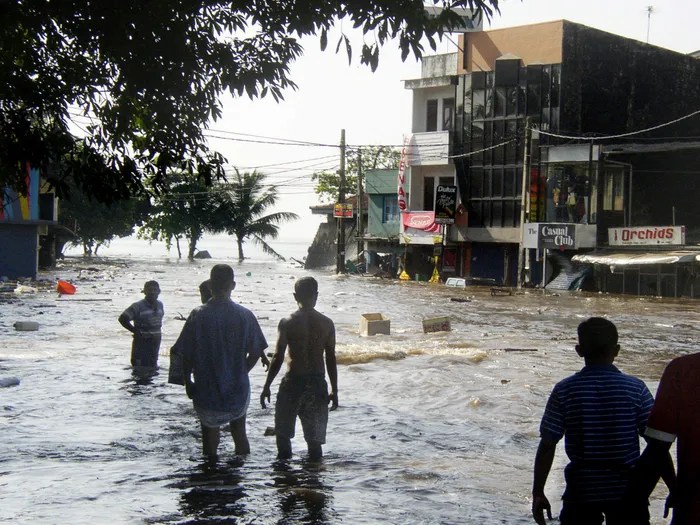
2004 was marked by the devastating tsunami that occurred on December 26th. Measuring at a magnitude of 9.3, the earthquake struck off the coast of Sumatra, Indonesia, triggering a devastating tsunami. Fourteen countries were affected. More than 230,000 people were killed. Millions were displaced. There’s almost no way to wrap your head around the magnitude of this kind of disaster and the way that hundreds of thousands of people were simply wiped off the earth.
Often people will use this kind of disaster as a talking point that goes something like, “Why would a loving God allow this kind of suffering?”
But my response would be, “Do you not understand that disaster, separation and death are all products of sin – sin that the first man and woman brought into this world. We live in a world where the brokenness of our world is the default. And it is BECAUSE God loved us so much that He gave His son as a sacrifice to die for our sins so that we might have life eternal.”
The thinking is often backwards. The disasters and tragedies of this world do not inform us that God is not loving. They inform us that we NEED to be rescued by a loving God who gave His son so that we might be redeemed.
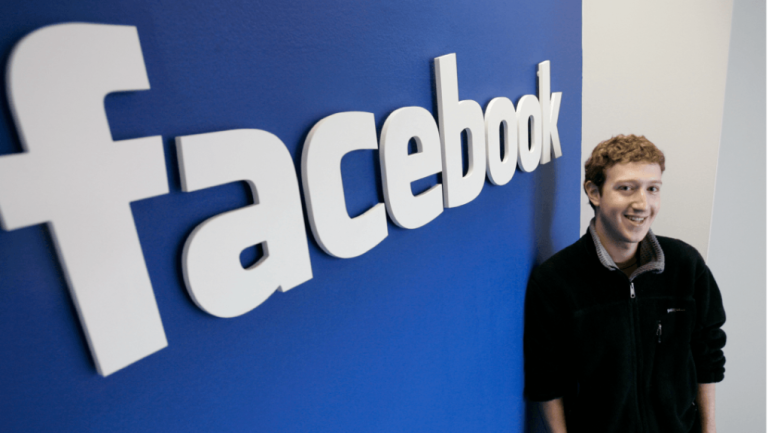
Earlier in 2004 Mark Zuckerberg gifted us with Facebook, the social media site. The site has developed into a global social media platform with over 3 billion monthly active users worldwide.
People can post their family vacations, hobbies, parties, and even what they’re eating for breakfast – exactly as they would like their filtered lives to be seen by others. You can even start arguments and post way too much information about your personal life – if that’s your thing.
Facebook has completely transformed how people connect and how they digest the news that influences public opinion and political engagement. It has also influenced issues of privacy expectations and communication styles. And while it is now 20 years old and very few of the “kids” are communicating via Facebook, it’s still an excellent way see how others “of a certain age” are living their lives with better photo filters, lighting and angles.
Check back tomorrow for a review of the years 2005-2009!
 The Global Nexter
Great start to the the series Brother! I was in IT at a major Telecom provider during Y2K. The money and man hours spent to make sure it was a non-event is mind blowing. We were on conference calls New Years Eve with staff in offices all over the World to test systems after midnight while people were toasting and smooching. We were all pretty proud of out efforts even though we’d never know for certain what might have happened of we just let it play out.
wow. This sets it up for how we ended up where we are today. Humans are a mess and God is sovereign. So much of what you reminded us of…..I have not thought about in awhile. Well done friend